

When you talk about RBI rate cuts, a common question pops up in every investor’s mind:
👉 “Should I invest now or wait?”
👉 “What do I do with my cash until rates fall?”
You’re not alone.
In times like these, many investors end up keeping cash in hand — waiting for the “perfect moment.” But the truth is, waiting without a plan can cost you more than a wrong decision.
Let’s break this down in simple terms and let me make you understand what to do with your cash during the rate-cut waiting game.
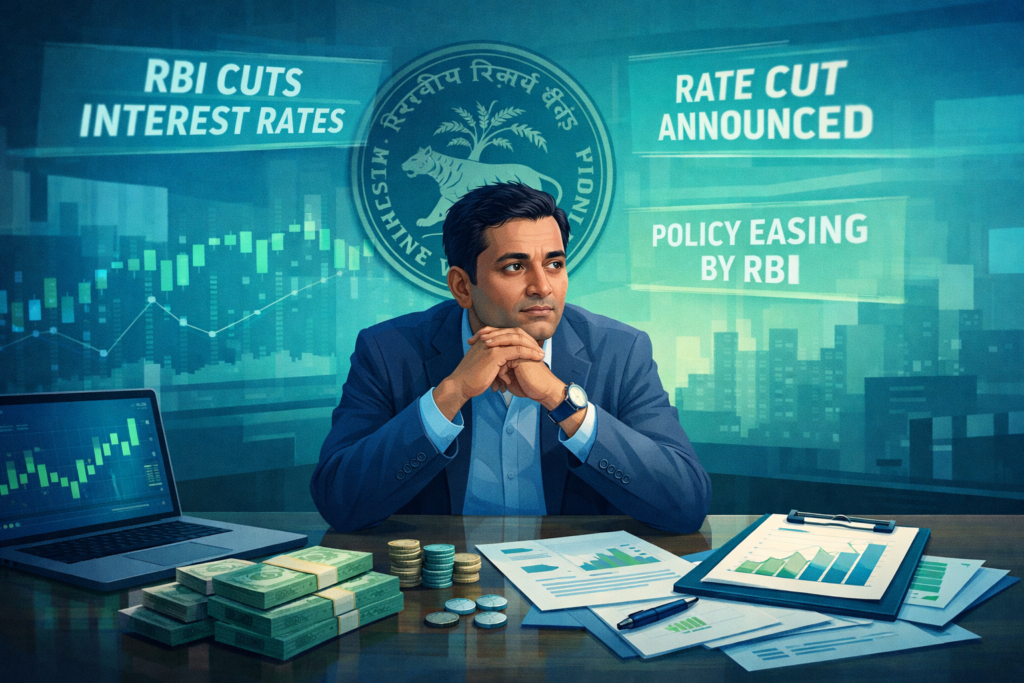
Why People Hold Cash During Rate Cut Expectations
Before jumping into solutions, let’s understand the mindset what people have.
When rate cuts are expected:
- Investors think markets may correct
- Fixed deposit rates may fall
- Bond prices may rise after the RBI rate cut
- Equity valuations may look expensive
So people pause. They wait. They do nothing.
Holding cash feels safe — but safety has a cost.
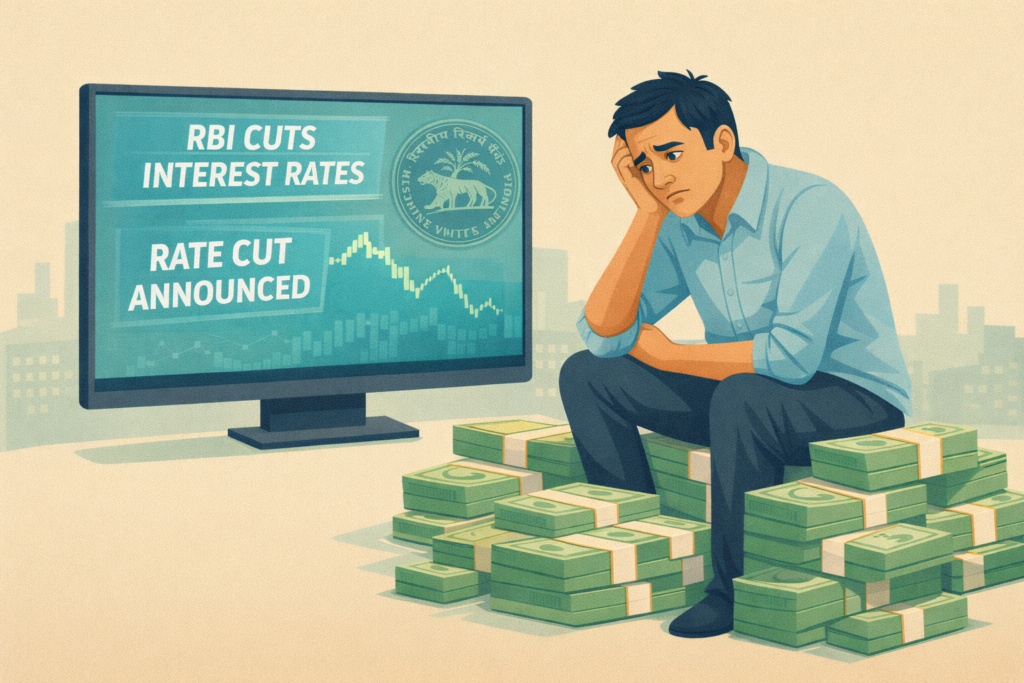
The Hidden Cost of Holding Too Much Cash
Cash feels comfortable, but over time it quietly loses value.
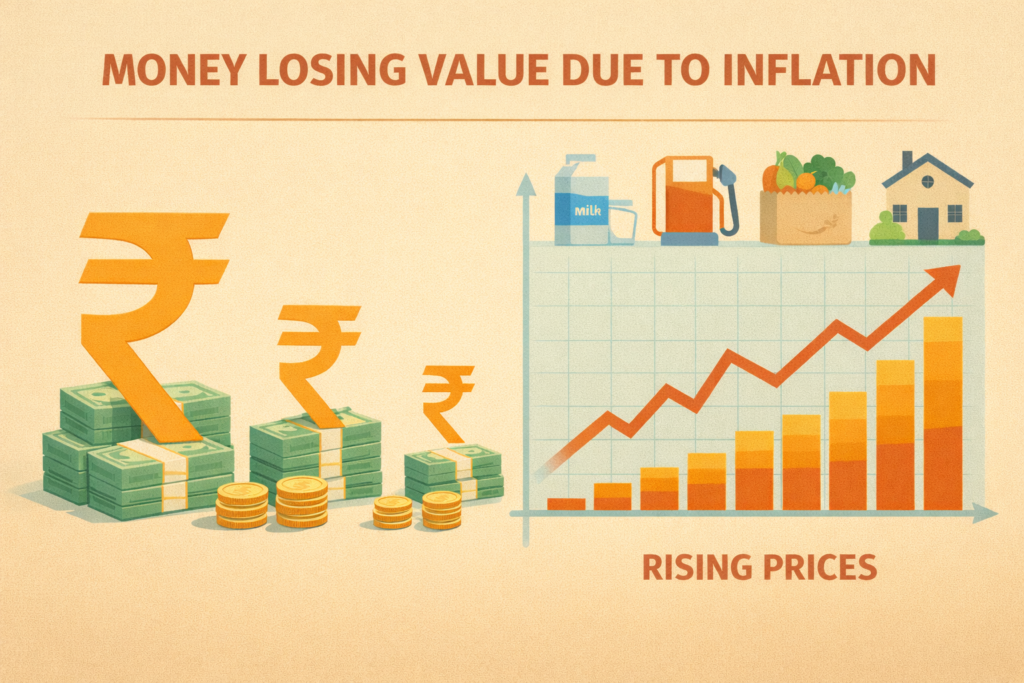
📉 1. Inflation Eats Cash Silently
- If inflation is around 5–6% and your cash earns nothing, your purchasing power is shrinking every year.
- ₹1,00,000 today ≠ ₹1,00,000 after 2–3 years.
⏳ 2. Missed Compounding Opportunities
- Markets don’t move in straight lines. Often, the biggest gains happen when people are still waiting.
- Trying to time rate cuts perfectly is extremely difficult — even professionals struggle with it.
🧠 3. Paralysis by Analysis
Constantly waiting for:
- One more RBI meeting
- One more inflation print
- One more correction
…leads to no action at all.
And in investing, no action is also a decision you make.
So, What Should You Do with Your Cash?
The answer is not “invest everything” or “stay fully in cash.”
The smart approach is balance + strategy.
Let’s break it down step by step.
1. Park Cash in Liquid & Short-Term Instruments
Instead of keeping money idle in savings accounts, park it where it’s:
✔ Safe
✔ Liquid
✔ Slightly productive
Best Options:
- Liquid mutual funds
- Overnight funds
- Ultra-short duration debt funds
- Short-term bank FDs
These won’t give massive returns, but they:
- Beat savings account returns
- Keep money accessible
- Reduce opportunity cost
This is your “ready-to-deploy” cash.
2. Use Systematic Investing Instead of Lump Sum
If you’re waiting for rate cuts to invest in equities, don’t wait with 100% cash.
Smarter approach:
- Start SIP or STP (Systematic Transfer Plan)
- Invest gradually over 6–12 months
This way:
- You don’t miss market upside
- You don’t risk bad timing
- Emotions stay under control
Remember:
📌 Markets reward participation, not prediction.
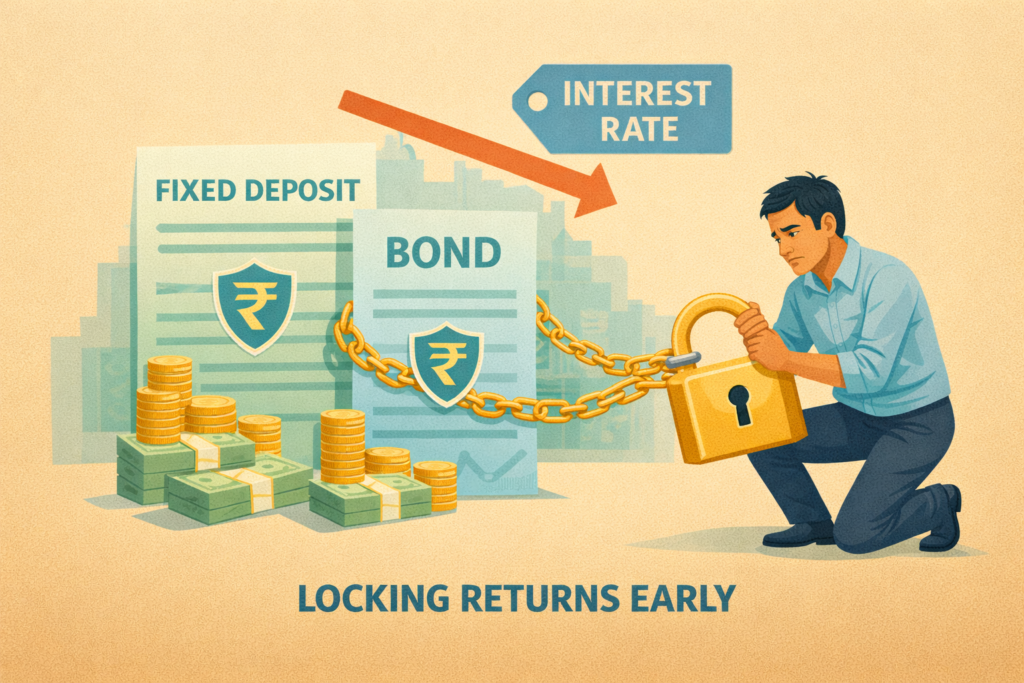
3. Lock Some Fixed Income Before Rates Fall Further
When rate cuts happen:
- FD rates usually go down
- New investors earn lower yields
If you already have cash:
- Lock part of it in medium-term FDs
- Consider debt funds with slightly longer duration
This helps you:
✔ Secure current yields
✔ Reduce reinvestment risk later
Don’t wait for rates to fall to realize you missed better returns.
4. Prepare a “Post-Rate-Cut Shopping List”
Instead of waiting blindly, prepare in advance.
Ask yourself:
- Which stocks do I want to buy?
- At what valuations?
- Which sectors benefit from rate cuts?
Rate-cut-friendly sectors often include:
- Banking & NBFCs
- Real estate
- Auto & consumer discretionary
- Infrastructure & capital goods
When corrections happen, you act — not panic.
5. Keep Emergency Money Separate
This is critical.
Your investment cash and emergency fund should never mix.
Emergency fund:
- 6–12 months of expenses
- Kept in savings / liquid funds
- No market risk
Once this is secure, investing becomes mentally easier — especially during uncertain times.
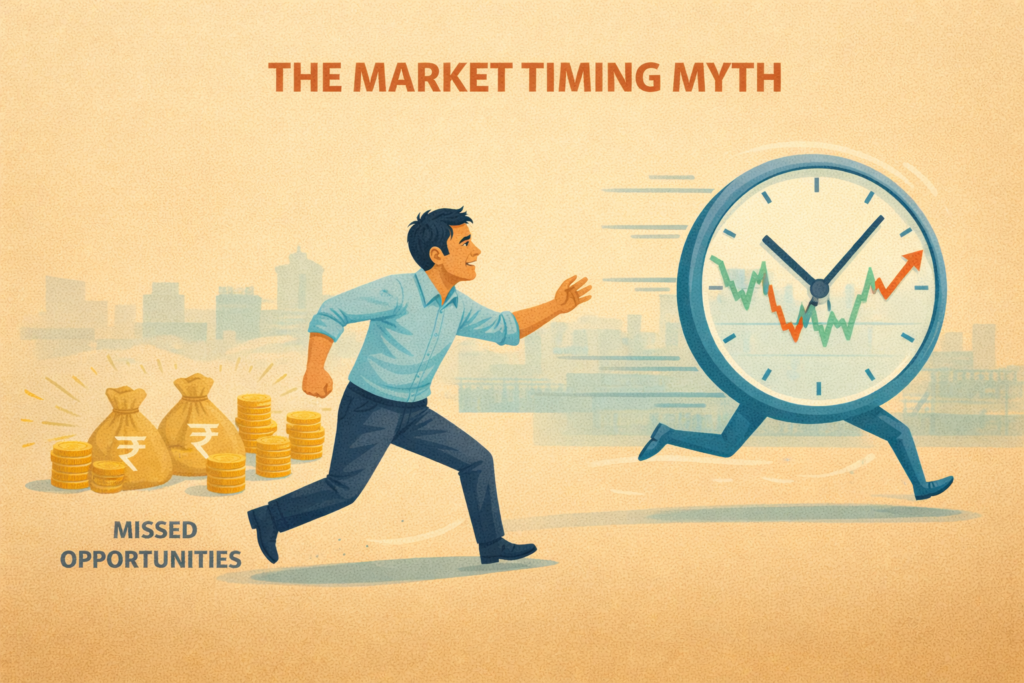
6. Don’t Chase “Perfect Timing”
This is the biggest mistake in the rate-cut waiting game.
Markets usually:
- Move before rate cuts
- Price expectations early
- Surprise latecomers
By the time the rate cut is announced:
- Markets may already be up
- Bond prices may already reflect the cut
Perfect timing is a myth.
Good strategy is real.
7. Think in Asset Allocation, Not Predictions
Instead of asking:
❌ “When will RBI cut rates?”
Ask:
✅ “How much should I allocate to equity, debt, and cash?”
Example:
- Equity: 60%
- Debt: 30%
- Cash: 10%
Rebalance when needed.
Let discipline do the heavy lifting.
Common Mistakes to Avoid During Rate Cut Phases
🚫 Sitting entirely in cash for years
🚫 Jumping in all at once after headlines
🚫 Chasing risky assets out of boredom
🚫 Constantly changing strategy with news
Markets punish impatience more than mistakes.
Final Thoughts: Cash Is a Tool, Not a Strategy
Holding cash is not wrong.
Holding cash without a plan is.
The rate-cut waiting game rewards:
✔ Preparation
✔ Discipline
✔ Gradual action
Not fear. Not perfection. Not prediction.
Use this phase to:
- Park cash smartly
- Invest systematically
- Prepare for opportunities
- Stay emotionally calm
Because in investing, time in the market beats waiting for the right time.
Read More: Important Finance Terms You Must Know
Pingback: Godrej Consumer Products Financial Model: How I Built a DCF Valuation in Excel - The EquityVerse
It was really well written mate. I really liked it to be honest. Keep up the good work.