
Introduction — Why Portfolio Building Matters
Investing in stocks is one of the most powerful ways to grow your wealth, but the real magic happens when you build your own portfolio, not just buying some random shares but trying to invest like a pro.
A stock portfolio is your personal roadmap to long-term financial success. It helps you manage risk, get new growth opportunities, and stay consistent even when the markets get volatile.
At The EquityVerse, my goal is to simplify finance and help you make smarter investing decisions. So today, let’s break down — step by step — how you can build your first stock portfolio in 2025 the right way with right mindset and right strategy.
First, Define Your Investment Goals
Before you buy your first stock, ask yourself one simple question — Why am I investing? This is an important question.
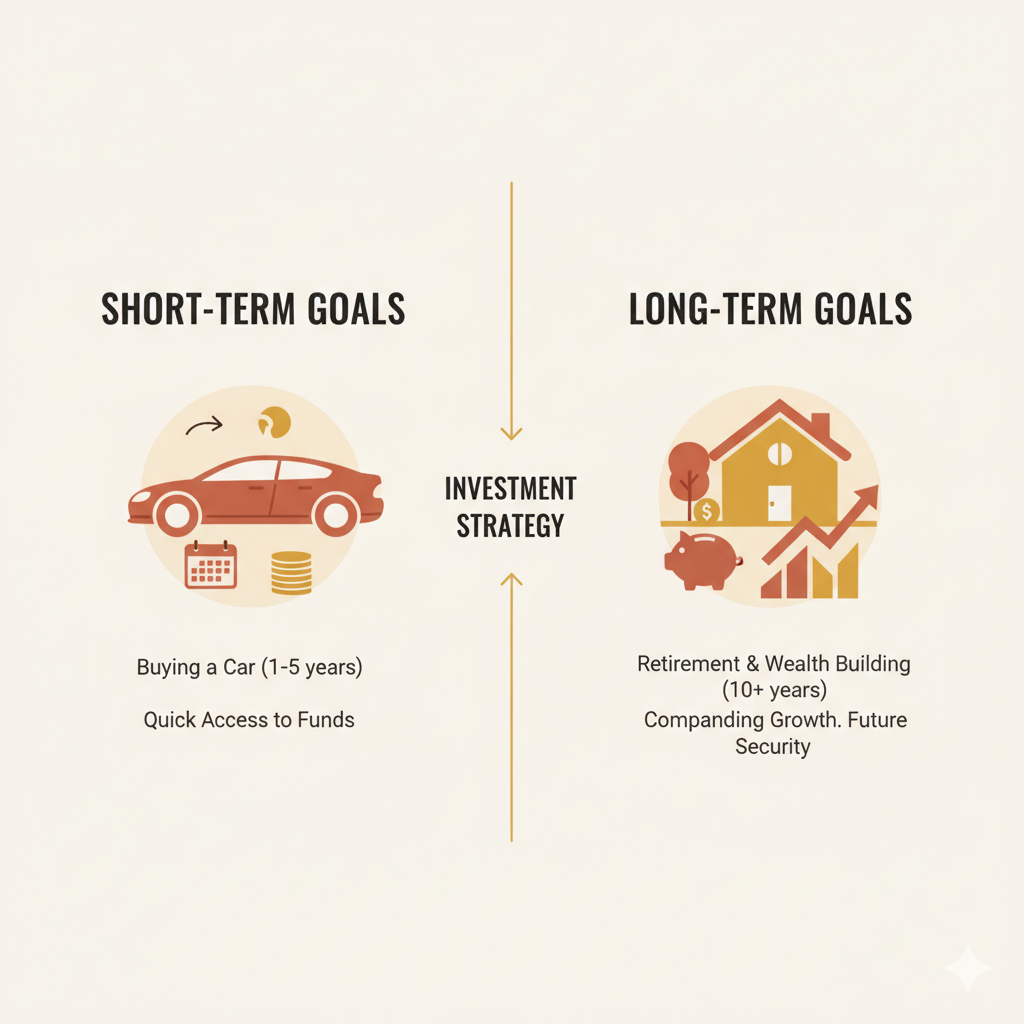
Are you investing for short-term gains, a 5-year goal like buying a car, or for long-term wealth creation and retirement?
Your portfolio should reflect your purpose — not the latest trend on social media, be mindful of what you are feeding yourself when you are about to start investing game.
Example:
- Short-term goal: Saving ₹1 lakh in 2 years, focus on safer large-cap stocks or ETFs.
- Long-term goal: Building wealth for 10+ years, add growth-oriented mid and small caps.
Pro Tip: Write your goal down. It will help you stay calm when markets don’t go as you expected.
Second, Decide How Much to Invest
Never invest money you might need soon. Your investments should come from your savings, not from your emergency fund. Otherwise what happens, people just start putting money without breaking down what is required and what not. They get carried away of the excitement of starting something new. They invest big and when they get out of money they withdraw their investment. And that’s how they are not able to achieve their goals.
Start small, but stay consistent, even ₹1,000 a month can grow significantly through the power of compounding.
Example:
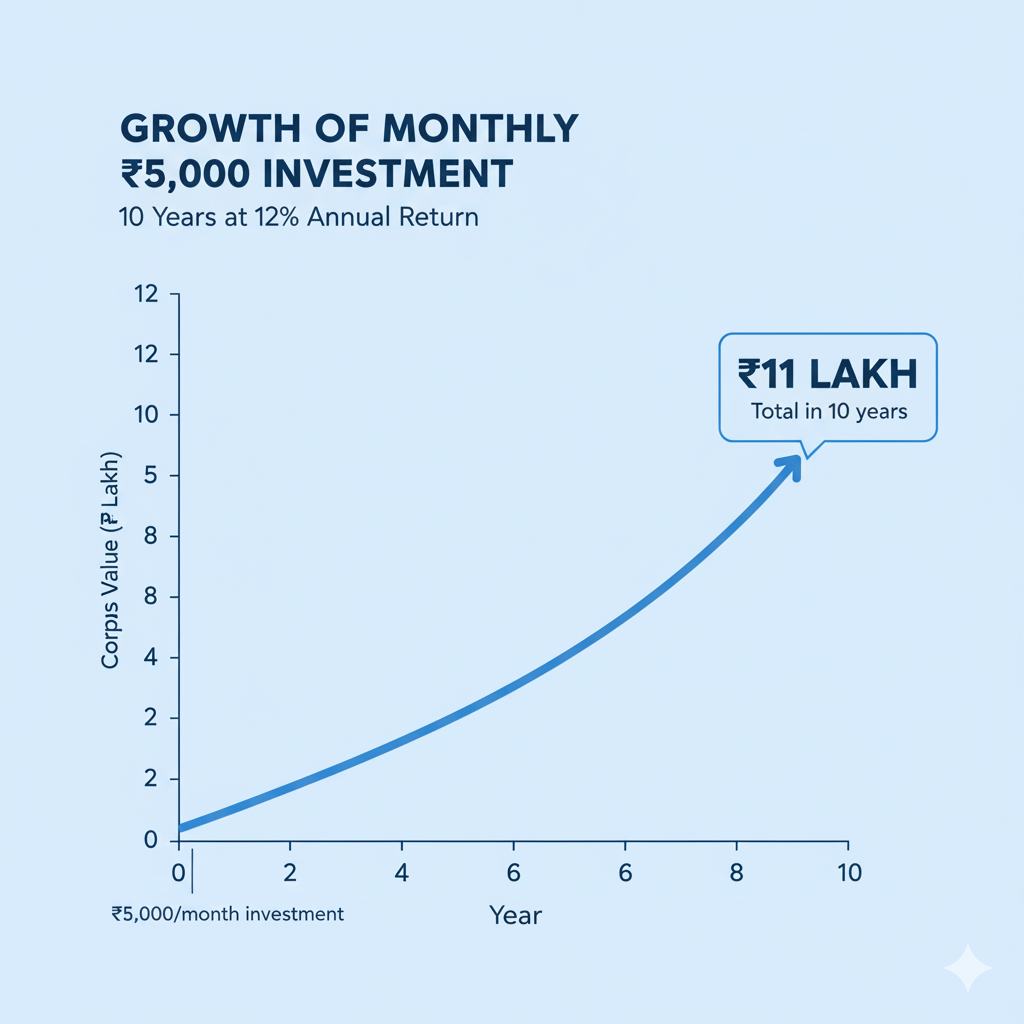
- If you invest ₹5,000 every month for 10 years with an average annual return of 12%, you’ll end up with over ₹11 lakh, just by being consistent.
- “It’s not about timing the market, it’s about time in the market.”
Third, Diversify Your Portfolio
- Diversification simply means — don’t put all your eggs in one basket.
- By spreading your money across sectors and company sizes, you reduce risk and increase stability and this increases the chance of getting better returns.
Imagine you invest all your money in 1-2 stocks and both doesn’t perform well after 1-2 years then you are nowhere. Some might say if both performs well then it’s a lottery. But this is not how the things work. Why take so much of risk? Instead, get 5-10 different stocks and invest in them, some might fail but some will get to newer heights.
Sample Beginner Portfolio Allocation:
This is not a recommendation this is just an example.
| Category | Allocation | Example Stocks |
|---|---|---|
| Large Cap | 40% | HDFC Bank, Infosys, Reliance Industries |
| Mid Cap | 30% | Voltas, Trent, Apollo Hospitals |
| Small Cap | 20% | KPIT Tech, Sonata Software |
| ETF or Cash | 10% | Nifty 50 ETF, Liquid Fund |
Start with a few high-quality companies. You don’t need 20 stocks, even 6–10 well-chosen stocks are enough when you start.
Fourth, Research Before You Buy
A good portfolio isn’t built on hype or advice, it’s built on research.
Before investing, check:
- Revenue growth (Is the company consistently growing?)
- Debt levels (Is the company overleveraged?)
- Return on Equity (ROE) (Higher ROE = efficient business)
- Management quality (Strong leadership ensures long-term success)
You can use free tools like Screener (which I use every time before I am investing or for educational purpose) or TickerTape to compare companies and track performance.
Always invest in a business you understand, not just a stock you’ve heard about otherwise you are in deep danger.
Fifth, Stay Consistent and Review Regularly
Once you’ve built your portfolio, your job isn’t to check prices every day, it’s to stay disciplined and avoid different thoughts which come into your mind while looking at your portfolio. You will face issue of not trusting your research if that particular investment doesn’t give instant result. I am telling you this from my personal experience. You have done your research well just trust that process and give some time to it. Don’t be rigid.
✅ Do:
- Review your portfolio every 6–12 months.
- Rebalance if one sector grows too large.
- Stay invested even when markets fall.
❌ Don’t:
- Panic sell during volatility.
- Jump from one stock to another every few weeks.
- Remember, the goal is steady compounding, not chasing quick profits.
Common Mistakes to Avoid
Even seasoned investors slip up sometimes. Here are a few beginner traps to steer clear of:
- Don’t follow random stock tips from social media.
- Ignoring diversification and investing heavily in one sector.
- Forgetting to set clear financial goals.
- Selling good stocks too early out of fear or greed.
- The stock market rewards patience, not prediction.
Bonus, How to Track Your Portfolio
Use portfolio tracking apps like:
- INDmoney
- Tickertape Portfolio
- Moneycontrol Portfolio Tracker
These tools automatically update prices, returns, and dividends, helping you stay on top of your investments.

Final Verdict
Building your first stock portfolio is not about finding the perfect stock because you can never do this, it’s about creating the right strategy.
- Start small, stay consistent, and keep learning.
- Over time, your portfolio will grow — not just in value, but in wisdom and confidence.
- And you will learn a lot during this time.
💬 What’s your investing goal for 2025? Share your thoughts in the comments below!
Read More Articles: Lenskart IPO Launch — Key Details, GMP, and How to Apply
Pingback: How to Analyse an IPO Before Investing - The EquityVerse